October 5, 2026
A modern workplace is no longer simply a space filled with desks, chairs and computers. The right interior design can have a significant impact on the everyday experience of employees, workplace organisation, collaboration and even the overall image of a business.
Lighting, ergonomics, partitions, materials, colours and the efficient use of available space are all elements that can transform an ordinary office into a functional, comfortable and inspiring working environment.
Functionality at the Heart of Workplace Design
A well-designed workplace should first and foremost respond to the real needs of the people who use it.
Not every activity requires the same environment. A typical working day may include focused individual work, phone calls, meetings, team collaboration and moments of relaxation.
For this reason, creating different zones within the same office can provide greater flexibility. Dedicated areas for focused work, meeting spaces, collaboration zones and informal areas can coexist while maintaining a consistent overall design.
Effective space planning does not necessarily mean having more square metres. It means making better use of the space already available.
Office Partitions: Privacy Without Closing the Space
In modern offices, partitions are an important element of interior design.
They can be used to define workstations, create smaller functional areas or provide greater privacy without the need for permanent walls.
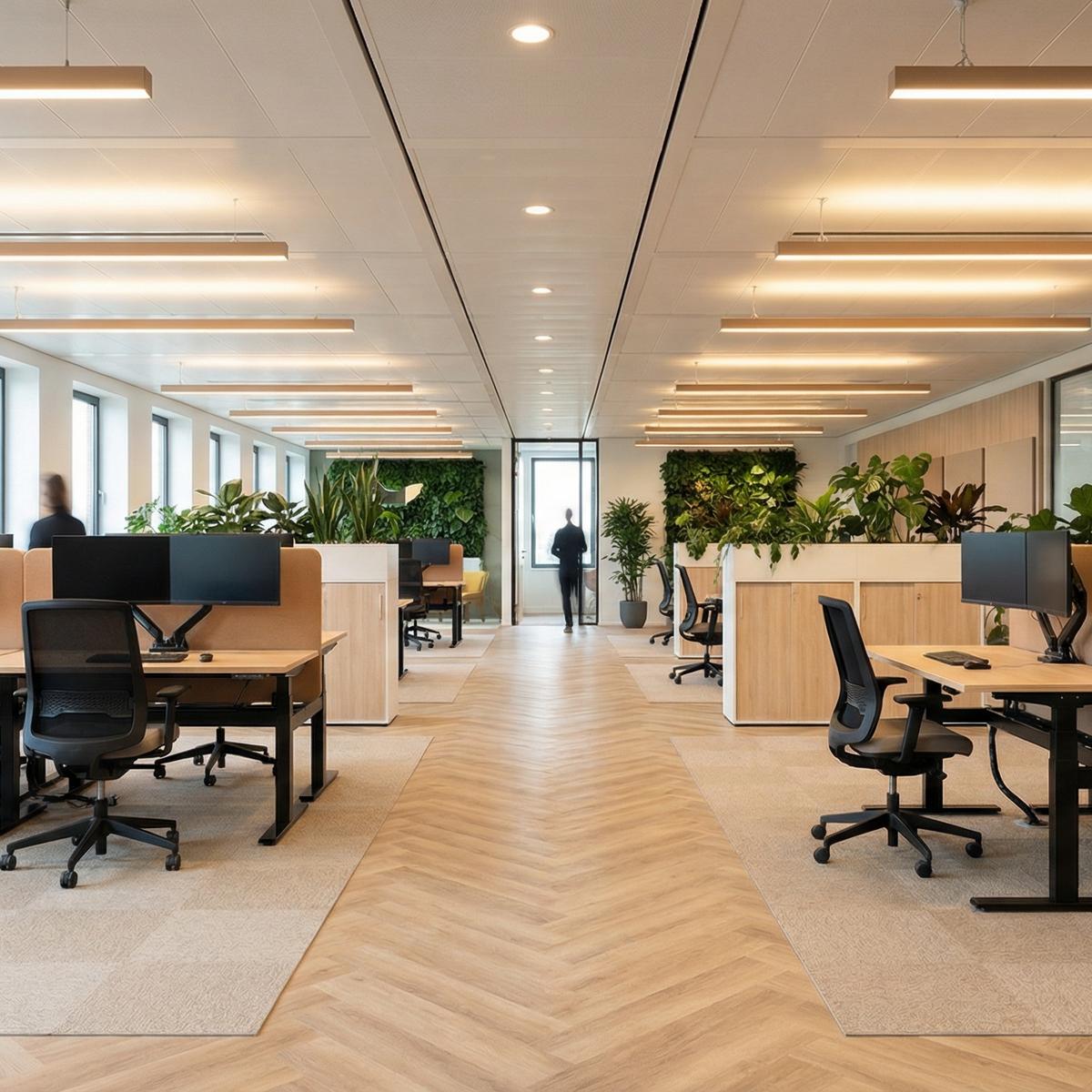
Materials such as glass, wood and acoustic panels can also become important design features. A partition is therefore not simply a practical element, but part of the overall visual identity of the workspace.
Especially in open-plan offices, carefully selected partitions can create the right balance between communication and privacy.
Lighting Can Transform the Atmosphere
Lighting is one of the most important elements of any workplace.
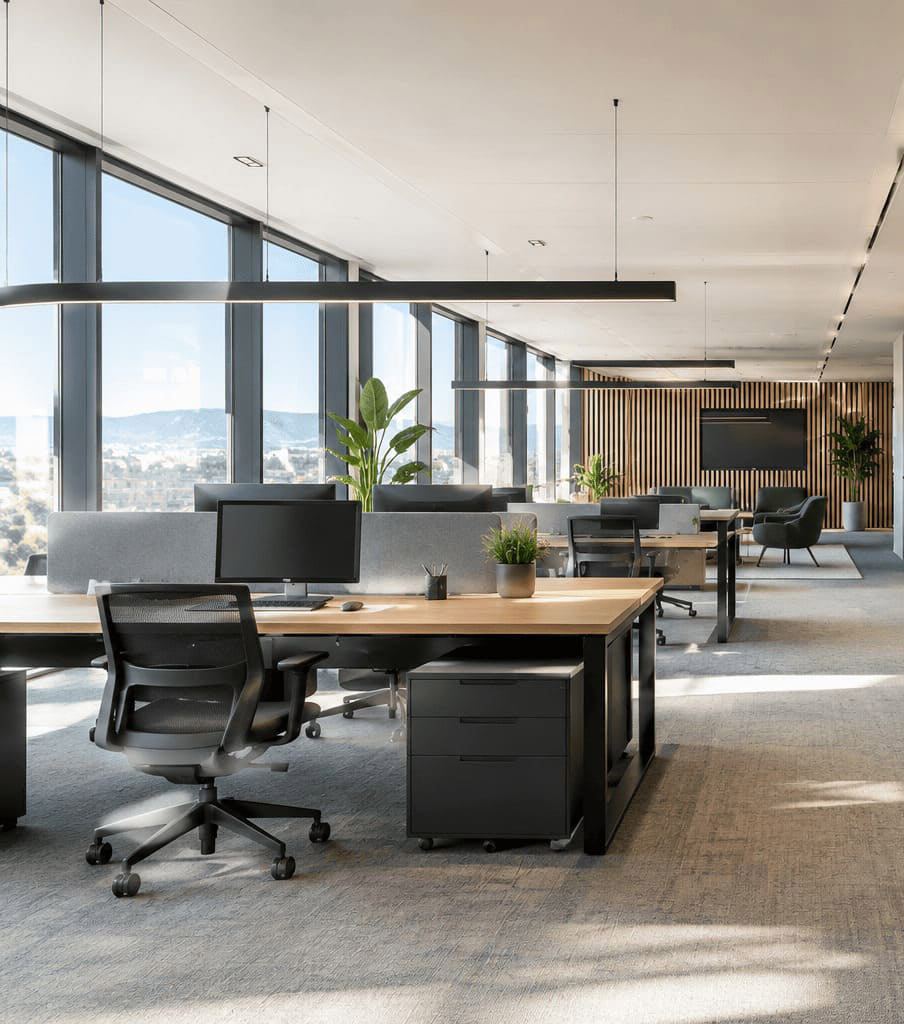
Whenever possible, natural light can make an office feel brighter, more spacious and more welcoming. At the same time, artificial lighting should be carefully planned to provide sufficient illumination without creating excessive reflections or uncomfortable contrasts.
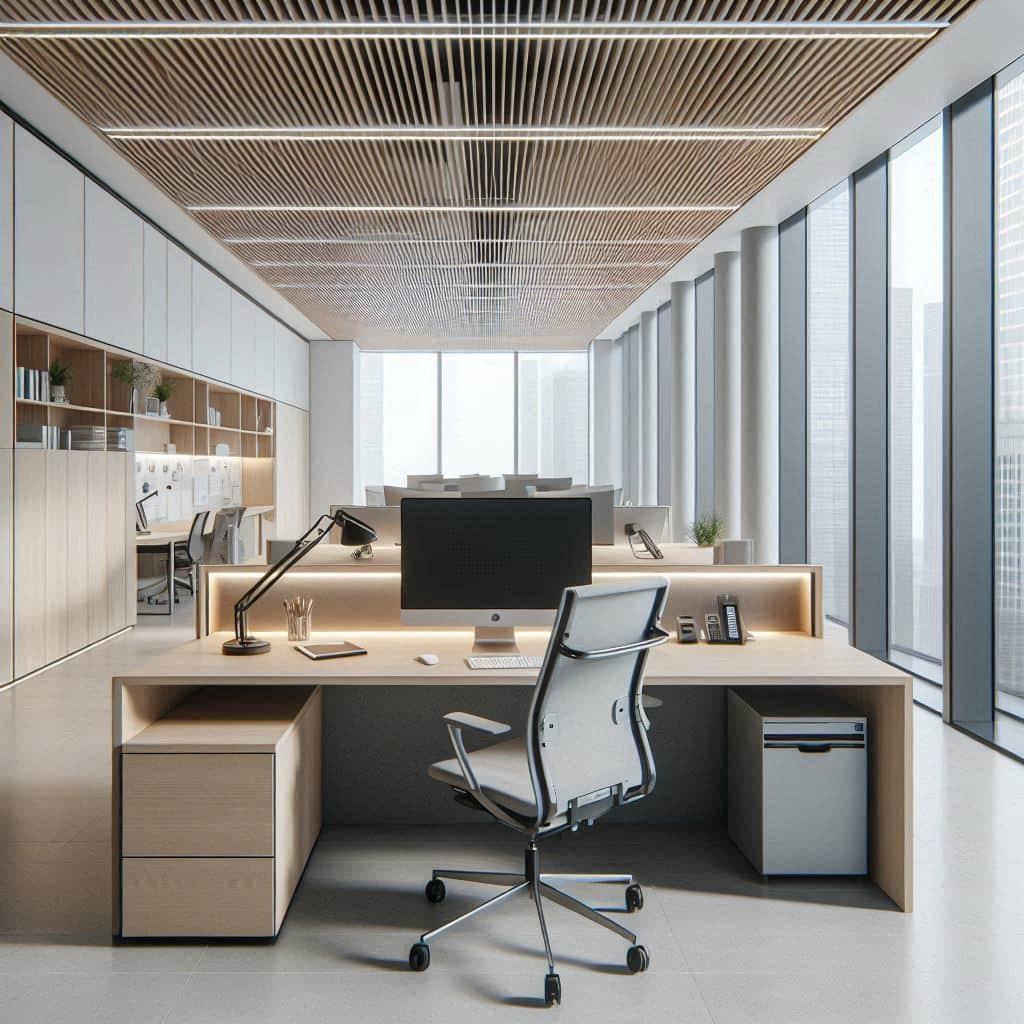
Combining general lighting with task lighting allows greater flexibility and creates a more comfortable working environment.
Acoustic Comfort for Better Concentration
In a busy professional environment, noise can become a significant source of distraction.
Conversations, phone calls and constant movement can affect concentration, particularly in open-plan offices.
Acoustic panels, fabric partitions, wall treatments, sound-absorbing materials and suitable flooring can all contribute to better acoustic control.
The goal is not necessarily complete silence, but rather an environment where sound is managed effectively and different activities can take place comfortably.
Ergonomics: Designing the Workplace Around People
The aesthetics of an office are important, but they should never come at the expense of comfort.
Ergonomic chairs, appropriately sized desks, adjustable workstations and correctly positioned monitors can make a significant difference to the everyday experience of employees.
Modern offices can also incorporate height-adjustable desks, different seating options and flexible workstations, allowing the environment to adapt to the needs of different users.
Ergonomics is therefore not simply a matter of comfort. It is an essential part of creating a workplace designed around people.
Bringing Nature Into the Workplace
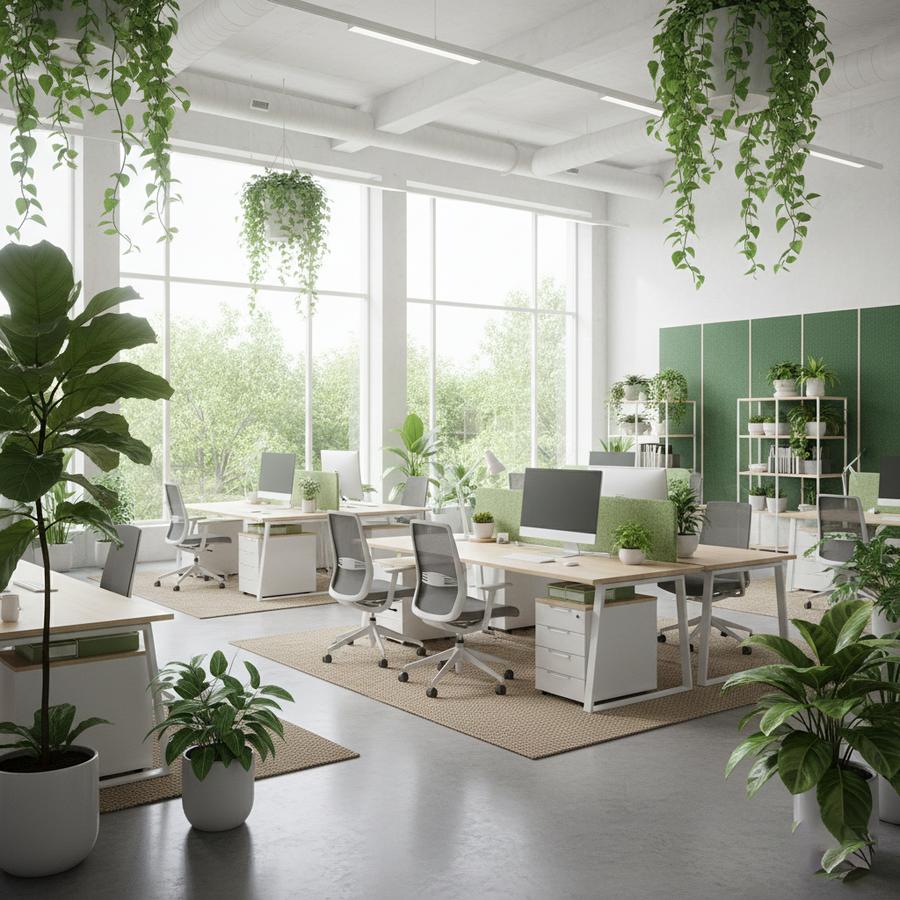
Plants, natural wood, earthy tones and views of the outdoors can introduce a more natural feeling into the workplace.
This approach, often referred to as biophilic design, focuses on creating stronger connections between people and the natural environment.
A plant on a desk, a wooden surface or a space filled with natural light may seem like a small design detail, but together these elements can completely change the atmosphere of an office.
Materials and Colours With a Purpose
Materials and colour choices do not have to be selected purely for aesthetic reasons.
Wood can add warmth, neutral tones can create a calm background, while carefully selected colours can be used to distinguish different zones or reinforce a company's visual identity.
In this way, interior design can connect a company's identity with the everyday experience of its employees.
A Workspace That Can Evolve
The needs of a business do not always remain the same.
The number of employees may change, teams may grow or move, and working practices may become increasingly flexible or hybrid. For this reason, modern workplace design is increasingly focused on flexible and adaptable solutions.
Movable partitions, modular furniture and multifunctional spaces allow an office to evolve without requiring a complete renovation every time its needs change.
The Right Interior Design Makes the Difference
Workplace interior design is not simply about aesthetics. It is a combination of functionality, ergonomics, lighting, acoustics, privacy and visual identity.
When all these elements are considered as part of one coherent design approach, the result is a workspace that not only looks modern, but also works better in practice.
A successful workplace interior is one that creates the right conditions for people to work, collaborate and concentrate comfortably, while at the same time expressing the identity and culture of the business itself.